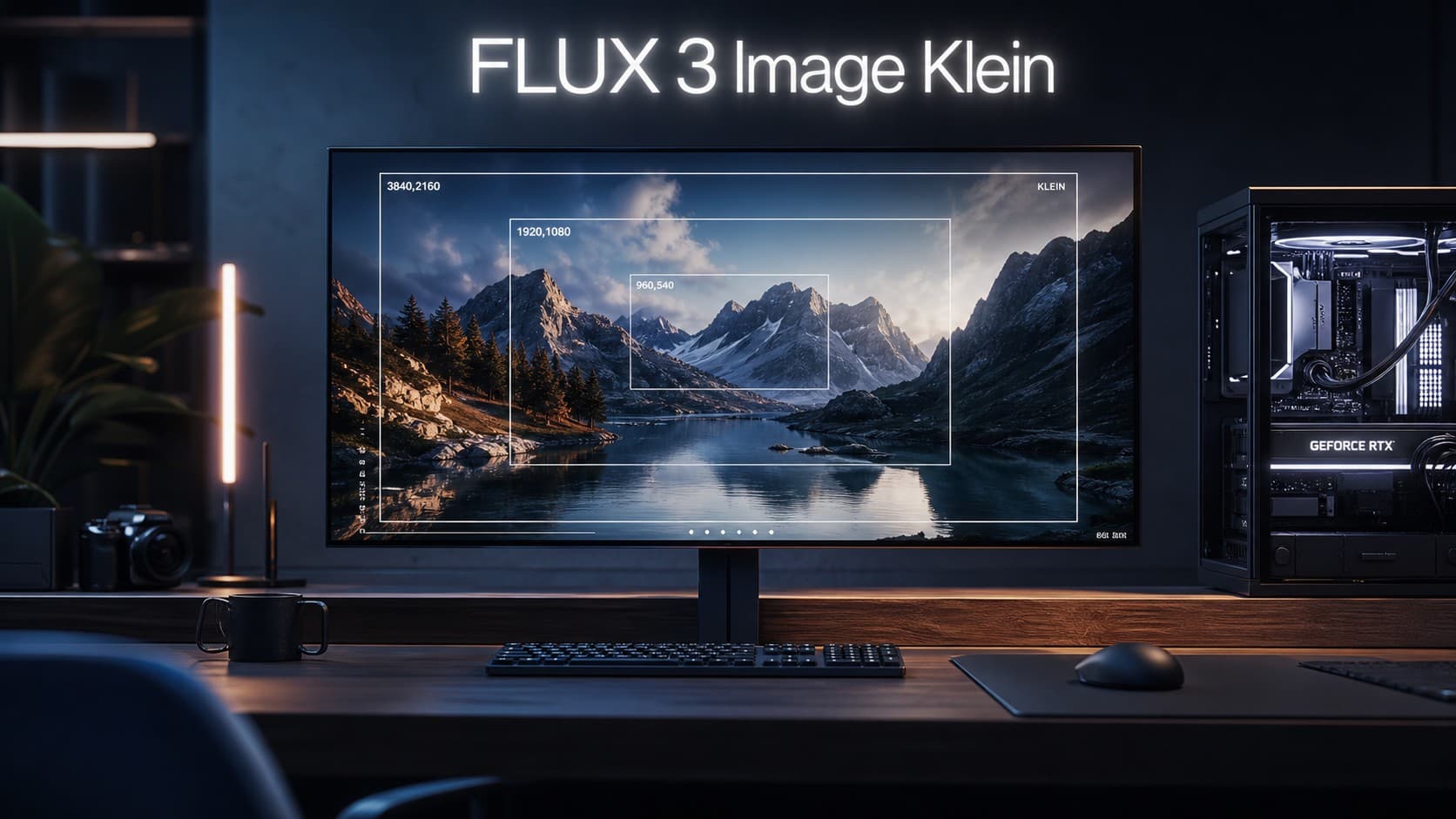
Black Forest Labs Releases FLUX 3 Image Klein Open Weights
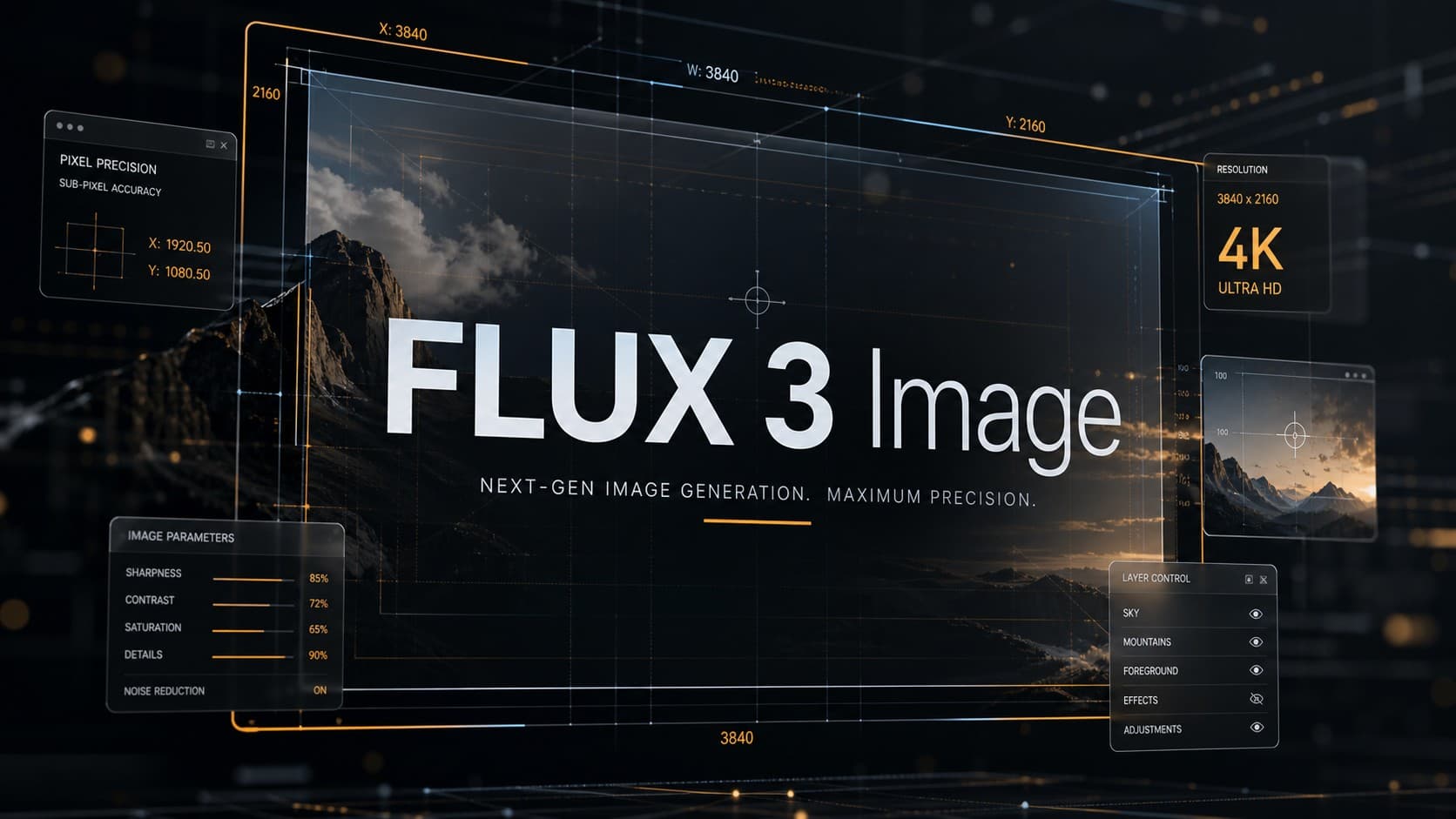
German AI company Black Forest Labs has released FLUX 3 Image Klein, a 5.6-billion-parameter open-weights model designed to generate and edit high-resolution images, with support for further customization on local hardware. Building on the core capabilities of the company’s larger FLUX 3 Image model, the release supports native 4K rendering, pixel-level editing, and multi-reference generation using up to ten source images.
FLUX 3 Image Klein is here.
Open Weights with the quality of a large frontier model. Customizable and fast.
5.6B parameters and runs on a single consumer GPU.
Native 4K, bounding boxes, and pixel-perfect editing. pic.twitter.com/uIOfPdNhuL
– Black Forest Labs (@bfl_ai) October 15, 2026
Designed for developers and creators looking for alternatives to centralized cloud platforms, Klein is designed to bring high-quality image generation to locally run systems. With quantized builds and support for tools like ComfyUI and Hugging Face Diffusers, users can run image generation and editing workflows directly on their own hardware.
This is the second open-weights release from the FLUX 3 family, following the robotics-focused FLUX 3 Action model, reflecting the company’s approach of adapting a shared foundation across different visual tasks.
Two Versions for Image Generation and Fine-Tuning
The release includes two versions for different use cases:
- FLUX 3 Image Klein (Distilled): A 16-step checkpoint designed for faster generation and lower latency during editing.
- FLUX 3 Image Klein Base: A 50-step checkpoint intended for research, fine-tuning, and training custom adapters such as LoRA.
According to Black Forest Labs, the architecture draws on shared learnings across static images, video, and audio. Static images provide spatial detail, video adds an understanding of physical dynamics and motion, and audio provides context about real-world interactions. Co-founder and CEO Robin Rombach stated that this shared foundation allows developers to adapt the model across diverse tasks, from visual generation to robotics.
Running Klein on Consumer GPUs
Klein is available in several weight formats designed to reduce memory requirements. The generator weights require 11.2 GB of memory in BF16 precision and 5.6 GB in FP8. Through development work with NVIDIA, Black Forest Labs also released INT8 and NVFP4 builds.
The INT8 build allows Klein to run on NVIDIA GeForce RTX GPUs with as little as 8 GB of VRAM using ComfyUI or Diffusers. For teams working with sensitive assets or strict compliance standards, running the model locally can reduce the need to send proprietary images to external services.
However, running the model still requires resources beyond the weight files themselves. Memory overhead is needed for text encoders, image buffers, and intermediate computations, meaning total memory use varies based on resolution, batch size, and generation settings.
How Fast Does FLUX 3 Image Klein Run?
Performance benchmarks published by Black Forest Labs and measured with NVIDIA show generation times across different hardware setups for the 16-step distilled build:
- NVIDIA GeForce RTX 5090 (INT8): Generates a 1024 × 1024 image in about 4.1 seconds and completes an edit in 7.2 seconds. At 2048 × 2048, generation takes 15 seconds, and editing takes 43 seconds.
- NVIDIA GeForce RTX 4070 (INT8): Generates a 1024 × 1024 image in approximately 8.9 seconds and edits in 18.9 seconds. At 2048 × 2048, generation rises to 50.4 seconds.
- NVIDIA GB300 Systems (NVFP4): Generates a 1-megapixel image in under 0.6 seconds.
Generation takes longer at higher resolutions, making hardware selection an important factor for production workflows. In addition, local generation times measure processing on the GPU itself, whereas API latency includes network transfer and queuing.
Image Editing with Bounding Boxes and Multiple References
Beyond standard text-to-image generation, Klein includes tools for targeted image editing. A key feature is support for bounding boxes, which allows users to specify where an element should appear, move, or change color within an image, while aiming to preserve surrounding image details.
The model also supports pixel restoration to keep unedited regions untouched, and can accept up to ten reference images in a single prompt. This allows users to guide generation with multiple examples, such as specific objects, characters, or styles.
The model supports LoRA fine-tuning through Ostris AI Toolkit, with training recipes available through NVIDIA NeMo AutoModel.
Commercial Licensing and API Pricing
The release is governed by the FLUX Kommunity License. Under these terms, Black Forest Labs allows free commercial use for individuals and businesses with annual gross revenue under $5 million, including affiliates.
Organizations with revenue above that threshold must arrange a commercial agreement for self-hosting or access the model through the company’s official API. The hosted API charges identical rates for generation and editing based on output resolution:
- 768 × 768 pixels: $0.008 per image
- 1024 × 1024 pixels (1K): $0.009 per image
- 1.5K resolution: $0.011 per image
- 2048 × 2048 pixels (2K): $0.014 per image
- 3840 × 2160 pixels (4K): $0.036 per image
Local deployment requires suitable hardware, storage, and maintenance, while the hosted API charges users per image. Deciding between the two depends on production volume, internal hardware availability, and licensing status.
Competitive Benchmarks and Independent Verification
In internal evaluations released by Black Forest Labs, Klein scored ahead of other open-weights models, including Alibaba’s 7-billion-parameter Qwen-Image 2.1 and the 12.9-billion-parameter Krea 2. In company-reported Elo ratings, Klein gained 91 points in text-to-image generation and 70 points in editing over the previous 9-billion-parameter FLUX.2 Klein, using 38% fewer parameters.
However, these numbers come from internal vendor tests and have not been independently verified. The comparison charts also do not include newer closed models such as OpenAI’s GPT Image 2.5 or Google’s Nano Banana 2.1, nor do the local benchmark charts report generation times for native 4K output on consumer cards.
Safety Measures and What the Release Offers
Black Forest Labs implemented safety measures during development, including dataset filtering during pre-training and targeted fine-tuning to suppress harmful outputs. The company reports that external safety partner Cinder evaluated the model and found fewer vulnerabilities than in other popular open-weights releases.
FLUX 3 Image Klein gives developers another option for running and customizing image generation models locally. It combines local image generation with reference-based editing and options for model customization. For teams with the necessary hardware and qualifying revenue under the license terms, the release provides a practical, customizable alternative to fully hosted image services.