OpenAI Launches Images 2.6 with Faster Image Generation and Animated GIFs
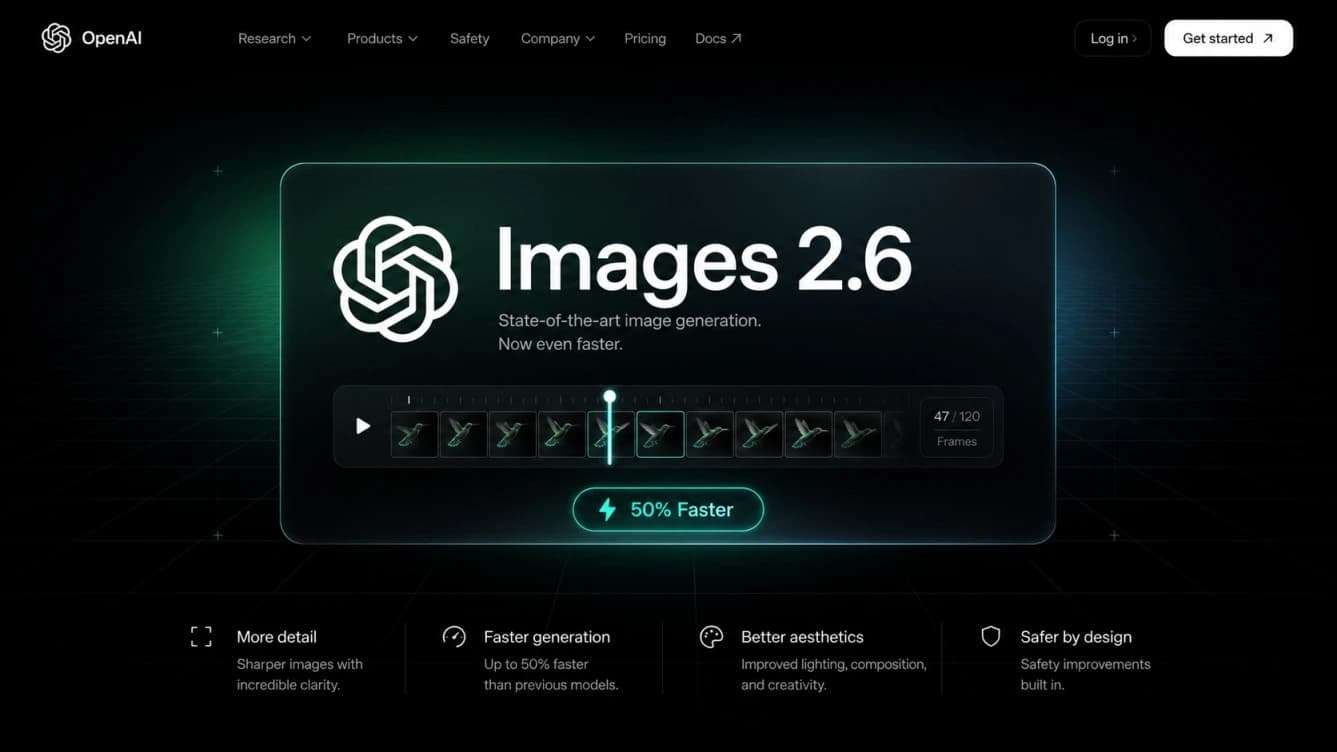
OpenAI has launched Images 2.6, its latest image generation update, bringing 50% faster image creation and the ability to turn text prompts and uploaded images into animated GIFs directly in ChatGPT. The release combines image generation, animation, and editing improvements, while introducing additional tools and model options for developers through the API.
Images, upgraded-introducing ChatGPT Images 2.6.
Now with GIFs and reference images.
Plus, two new models are coming to the API with 50% faster image generation. pic.twitter.com/kcuOhTipYR
– OpenAI (@OpenAI) November 4, 2026
The update also extends to Codex, giving users more ways to work with AI-generated visuals. OpenAI says people now create more than 4 billion images every week across ChatGPT, Codex, and its API, averaging over half a billion images per day. The growing volume highlights the expanding role of AI image generation in design, marketing, and digital content production.
Create Animated GIFs Directly in ChatGPT
One of the main additions in Images 2.6 is the ability to generate animated GIFs from either a text prompt or an uploaded image. Instead of producing a static picture, users can request a short animated scene and then adjust its playback speed, inspect individual frames, and edit them before sharing the final result.
This adds a new option for content creators and design teams working with short-form visual content. Marketers can animate brand characters for social media campaigns, while creators can produce reaction GIFs and memes without moving between separate image and animation tools.
The feature also has potential uses in game development and character design. Early sketches can serve as starting points for animated characters, allowing designers to experiment with movement, facial expressions, and different poses before moving into full video production.
OpenAI highlighted examples created with OpenArt and Town, a startup that integrated the model through the API into a work assistant built around animated characters. These examples show how image generation can extend beyond standalone visuals into interactive products and digital experiences.
50% Faster Image Generation and Improved Consistency
OpenAI says Images 2.6 generates images 50% faster than its previous version. The improvement is particularly relevant to workflows that involve producing multiple design variations or making several rounds of edits. Shorter generation times can reduce the time between an initial concept and a finished visual.
The company has also worked on improving visual consistency across repeated edits. The model is better at preserving the appearance of characters, products, and other visual elements when users make changes across multiple generations. This is especially useful for advertising campaigns and branded content, where several images need to feature the same character or product without losing its defining features.
For developers, OpenAI introduced two API models: GPT-Image-2.6 Flare and GPT-Image-2.6 Sunburst. Each targets a different type of image generation workflow.
- GPT-Image-2.6 Flare: Focuses on generation speed and improved composition for posters, product images, and professional designs. OpenAI says it can generate an image in as little as six seconds when using the low-quality setting.
- GPT-Image-2.6 Sunburst: Focuses on image detail and visual consistency across editing sessions, with stronger results at medium and high quality settings.
The two options give developers more flexibility when choosing between faster output and workflows that require greater visual detail or repeated refinements.
New Image Editing Tools for Developers
Images 2.6 also expands the editing capabilities available through OpenAI’s API, giving developers more control over how models modify generated images.
One addition is the availability of Image Markup through the API. The feature allows users to mark specific areas of an image and direct the model to edit those regions. This makes it easier to change an individual object or part of a scene without having to regenerate the entire composition.
OpenAI has also added SVG export. SVG is a vector graphics format that preserves sharp edges and visual clarity when an image is resized. It is commonly used for logos, icons, website graphics, application interfaces, and printed materials.
Another addition is the Complexity parameter, which controls how much planning the model performs before generating an image. Lower settings are suited to straightforward requests and faster tasks, while medium and high settings provide more room for processing complex scenes with multiple objects and detailed instructions.
Complexity serves a different purpose from image quality. The former controls the amount of planning involved in generating an image, while the quality setting determines the level of visual detail and output fidelity. This distinction gives developers more control over how the model handles different types of requests.
Companies Integrating Images 2.6
OpenAI highlighted several companies using the model, including Picsart, fal, Sable, Higgsfield, and Figma Weave, alongside OpenArt and Town.
Their work spans creative applications, image editing, and visual production platforms. Integrating image generation into existing products can make these capabilities part of established workflows rather than requiring users to switch to a separate AI image generator.
For design platforms and content production services, this approach can bring image creation and editing closer to the tools people already use. It also gives developers more options for building products around AI-generated visuals, from marketing assets to interactive digital experiences.
Images 2.6 Availability
OpenAI has announced the global rollout of Images 2.6 across ChatGPT and Codex on the web, as well as mobile and desktop applications. The company says the release is available across all subscription tiers.
Developers can access GPT-Image-2.6 Flare and GPT-Image-2.6 Sunburst through the API, along with the additional editing and generation controls introduced in the update.
With Images 2.6, OpenAI is expanding image generation beyond static output. The combination of faster creation, animated GIFs, improved consistency, and more precise editing tools brings several stages of visual production into a more connected workflow. For creators, businesses, and developers, the update puts greater emphasis on turning an initial image or idea into visual content that can be refined, animated, and used across different platforms.