Meta Launches Muse Wonder and Wonder Full to Compete with Leading Frontier AI Models
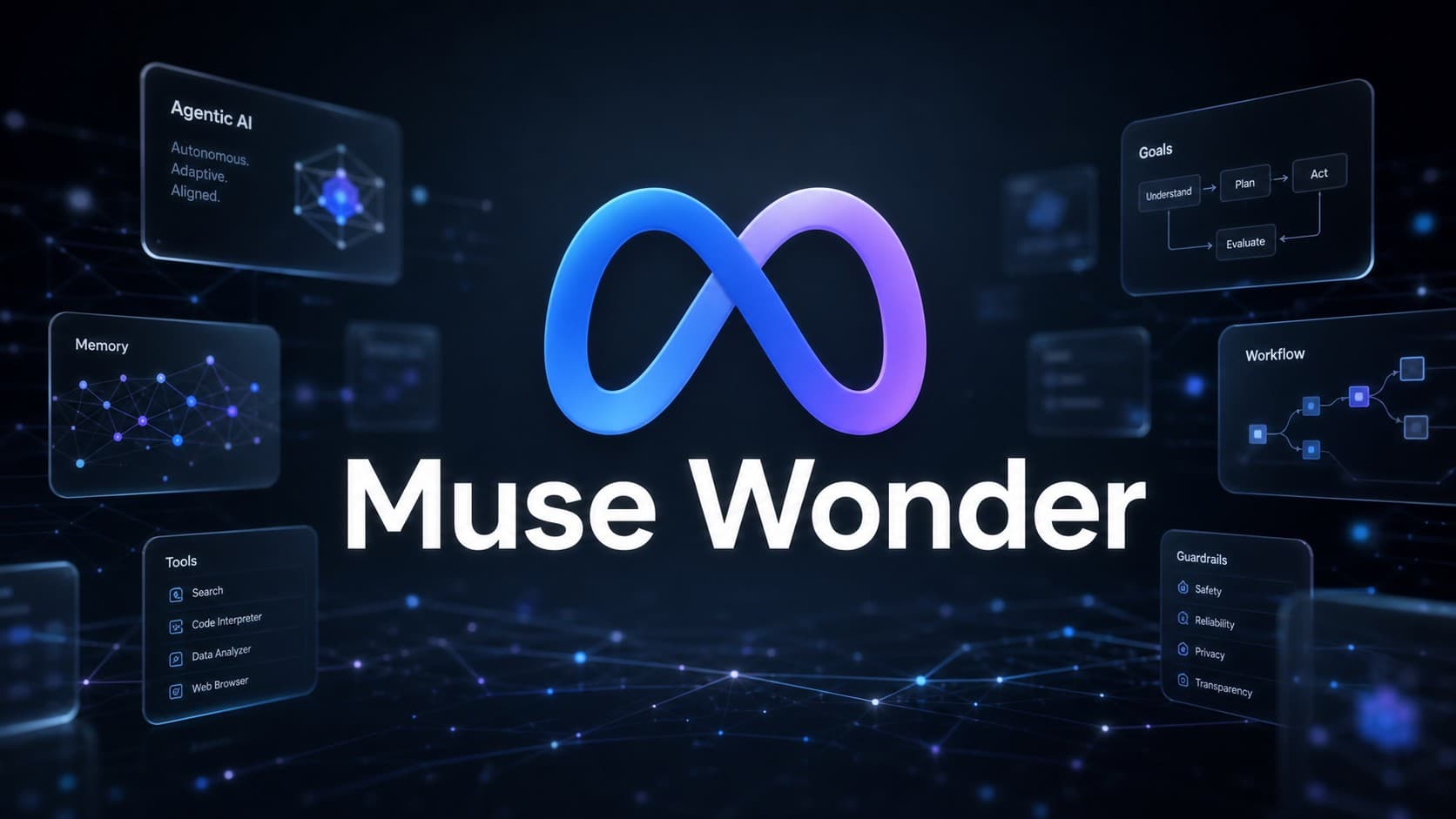
On October 12, 2026, Meta announced two new frontier models, Muse Wonder and Muse Wonder Full. The launch expands Meta’s AI lineup and puts the company in more direct competition with OpenAI and Anthropic. Rather than focusing only on chat interfaces, the new models are designed to handle complex coding and power AI agents that can carry out multi-step tasks from start to finish.
Meta describes the two releases as its most capable models yet, building on research that began with Muse Spark. They are built to move beyond answering questions or generating text, focusing instead on practical work like analyzing legal documents, parsing financial data, and developing software.
What Is the Difference Between Muse Wonder and Muse Wonder Full?
Meta is offering the two models at different capability tiers. Muse Wonder is aimed at developers and businesses that need a frontier model for everyday tasks and coding. Muse Wonder Full is the more capable version, designed for demanding technical challenges.
Muse Wonder is available through the Meta Model API and the Muse Code programming assistant, allowing developers to integrate it into their own software. In contrast, Muse Wonder Full is currently limited to Muse Code subscribers.
According to Meta, both models are built to handle jobs that require more than a single prompt. They can plan a sequence of steps, use digital tools, check their own work, and recover from errors rather than stopping at the first obstacle.
Core Capabilities of Meta’s New AI Models
The models are designed to handle projects that involve several steps, including:
- Coding and software development: The models can work across large codebases, modify multiple files at once, and help build apps and games while running tests to verify the output.
- Long-running projects: They can break large tasks into smaller steps, hand off subtasks to secondary agents when needed, and recover from bugs or unexpected errors during execution.
- Computer and browser use: The models can navigate desktop interfaces and web browsers. This allows AI agents to take practical actions online or inside applications instead of just giving text instructions to the user.
- Specialized knowledge: Meta says the models perform well in fields like law, finance, and healthcare, helping users understand contracts, analyze financial reports, and process technical records.
Active Memory and Active Focus: Keeping Agents on Task
Two key features in Muse Wonder are Active Memory and Active Focus.
Active Memory helps the model retain relevant details from past conversations and bring them up when needed. The goal is to avoid re-explaining project context every time a user starts a new session, which is especially useful for projects that run over days or weeks.
Active Focus is designed to help the model keep working when a task runs into problems. Instead of stalling, the model can try alternative methods, resolve errors, and keep working toward the end goal. Meta notes that the model will still ask for clarification or check in with the user before taking major actions.
These features do not mean the models will complete every task without mistakes. However, they reflect a clear shift toward AI systems that manage ongoing workflows rather than just answering individual prompts.
Muse Wonder Benchmark Performance
Meta published benchmark results comparing both releases with other frontier models. Independent testing by Artificial Analysis also showed clear gains over the earlier Muse Spark 1.3.
On Artificial Analysis’s Intelligence Index, Muse Wonder scored 52 points, while Muse Wonder Full reached 56 points at high reasoning settings. Those scores put Wonder Full alongside leading models in the evaluation, though it does not lead across every test.
Scores vary depending on the benchmark. Wonder Full performed strongly on sustained coding tests like SWE-Marathon, but the gap narrowed on tests measuring general knowledge and command-line tasks. Because benchmarks do not always reflect real-world use, teams looking to deploy the models should test them against their own workflows.
Pricing and How to Access Muse Wonder
Muse Wonder is available through the Meta Model API for $4 per million input tokens and $20 per million output tokens. Total cost will vary based on prompt size, output length, and how heavily an application uses caching.
Meta is not offering Muse Wonder Full through a pay-as-you-go API. Instead, access is tied to paid subscriptions for Muse Code.
Developers can test Muse Wonder now through the API or Muse Code. Everyday users looking to use the models in the consumer Muse app will have to wait for a phased rollout, with Meta rolling access out to paid subscribers first.
Is This an Important Step for Meta?
The release of Muse Wonder and Muse Wonder Full highlights Meta’s move toward frontier models that can handle complex work rather than just generate text. AI agents and automated coding are clearly areas where the company wants to compete directly with OpenAI and Anthropic.
Their real-world impact will depend on practical reliability, operating costs, ease of integration, and data privacy safeguards. Practical testing in business environments will be more telling than vendor benchmark comparisons.
For now, developers can access Muse Wonder through the Meta Model API and Muse Code, while Muse Wonder Full remains exclusive to Muse Code subscribers. Wider access across the consumer Muse app will roll out gradually according to Meta’s schedule.