Inside Google Stitch Loop: How Google’s New AI Agent Works
Hands-on tests published on November 21 reveal the internal architecture of Google Stitch Loop, detailing how the AI agent organizes software projects inside isolated workspaces, builds editable skill files, and translates high-level product goals into measurable KPIs and executable code tasks.
Introducing Stitch Loop, a new Stitch experiment.
Stitch helps you design your product. Stitch Loop helps you keep improving it once it’s live: a product agent built for outcomes, not just PRs.
Stitch Loop monitors your production data and lets you build loops that work… pic.twitter.com/tsaz5lDAxq
– Stitch by Google (@stitchbygoogle) November 18, 2026
The findings follow Google Labs’ November 18, 2026 announcement opening the global waitlist for the post-launch product optimization tool. According to a hands-on evaluation published by TestingCatalog after several weeks of testing, the system is codenamed Jitro internally at Google and shifts developer tooling from single-command coding assistants to autonomous agents driven by measurable production outcomes.
Workspace Setup in Stitch Loop and Markdown Skill Generation
Managing a project in Stitch Loop begins by creating a dedicated Workspace, linking it to a GitHub repository, and feeding the agent operational product context-including runtime logs, user behavior analytics, and customer feedback. Google provides more than 180 pre-built integrations for ingesting this data, alongside support for custom Model Context Protocol (MCP) servers and local file uploads via the Stitch CLI command-line tool.
TestingCatalog’s evaluation shows that once connected to a repository, the agent immediately analyzes the project’s architecture and commit history before automatically generating product-specific Skills files. These files document the product’s objectives, core components, and performance metrics in a dedicated Workspace section formatted in Markdown, enabling developers to inspect and manually edit the agent’s understanding of the codebase before any code changes are executed.
During pre-release testing, the experimental build ran on Gemini 3.8 Flash, executing targeted improvements to TestingCatalog’s page templates alongside accessibility and technical compliance fixes before transitioning to the Gemini 4 model family for the official launch.
Turning High-Level Goals into Measurable KPIs and Code Tasks
Rather than requiring engineering teams to write exhaustive backlogs of tickets, Stitch Loop lets users create Custom Loops by entering a loop name, an icon, and a natural-language goal description. The system then analyzes project data, recommends the most relevant Key Performance Indicators (KPIs) to track progress, and displays them on a centralized dashboard.
In TestingCatalog’s practical test, the author tasked the agent with increasing member contributions in the publication’s Telegram community. Stitch Loop broke down that broad objective into three quantitative KPIs: total community members, registered contributors, and active members.
Cross-referencing website traffic with channel engagement metrics, the agent identified an operational bottleneck: the lack of a structured mechanism to capture and discuss reader submissions. It generated a detailed task card featuring tags, last-updated timestamps, an activity timeline, and an Evidence section tying the issue directly to production numbers.
To close the gap, the agent proposed building a custom bot using the Telegram Bot API equipped with a Webhook to route incoming reader submissions into an editorial review pipeline. The proposal included evaluation cards detailing expected Impact, Scope, and Risk so the team could assess trade-offs before approving execution.
The Four-Stage Stitch Loop Workflow and Post-Deployment Learning
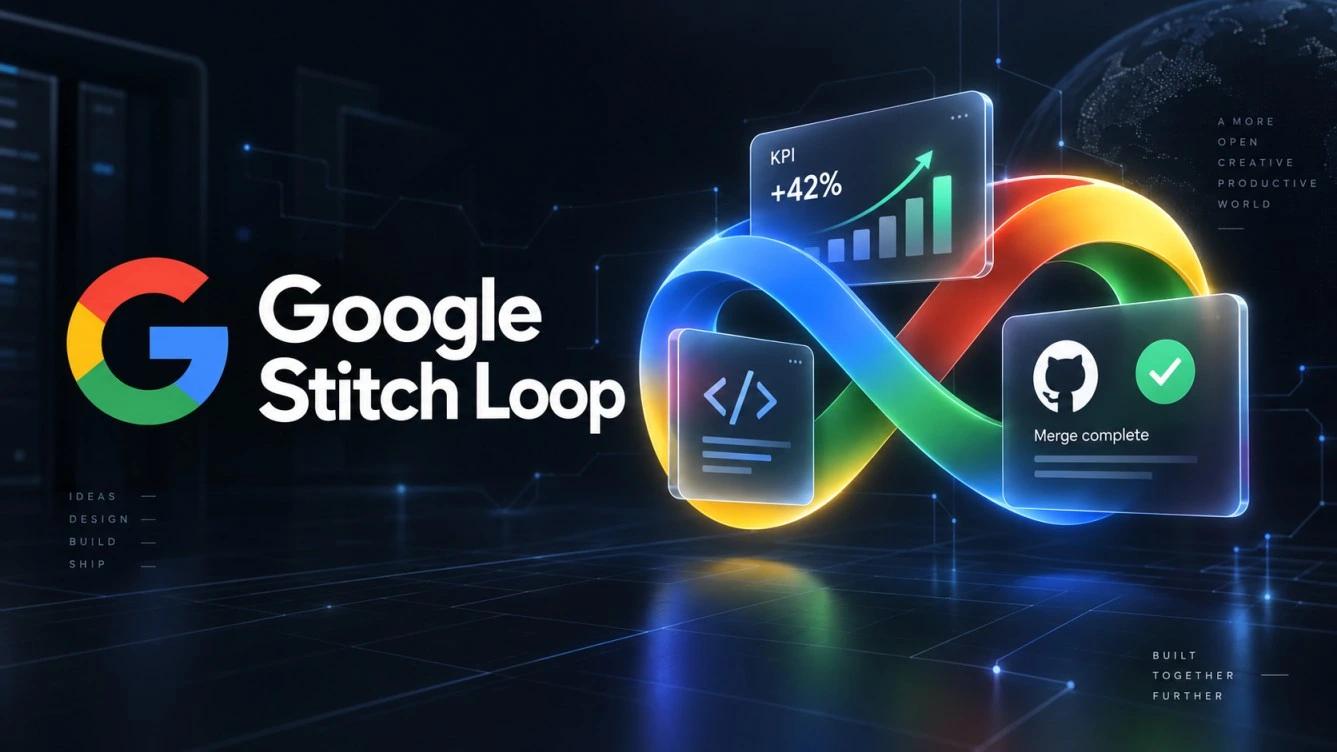
Stitch Loop operates on a continuous, four-stage automated loop that runs from opportunity discovery to live production impact tracking:
- Suggestions: The system identifies code vulnerabilities or performance bottlenecks backed by live usage evidence. In Google Labs’ official demo, the agent flagged an unprotected API endpoint (/api/orders) exposing all customer order data without authentication, proposing access controls to restrict responses to the authenticated user’s orders only.
- Solutions: The agent outlines one or more remediation paths, detailing technical trade-offs and change scope for each option, complete with visual UI mockups whenever modifications affect the user interface.
- Build: Once the team selects a solution, the agent writes the code inside an isolated Cloud Sandbox powered by Gemini models, then opens a GitHub Pull Request accompanied by screenshots or video recordings of the changes.
- Reflect: This stage separates Stitch Loop from conventional coding agents. After a Pull Request is merged and deployed, the system continues monitoring live production metrics. If metrics improve, the agent reinforces that pattern for future recommendations; if performance dips, it re-analyzes root causes, maintaining continuous oversight even after targets are met to prevent regressions.
Built-In Default Loops for Cybersecurity, Latency, and Accessibility
Alongside custom business loops-such as boosting e-commerce checkout conversion rates or streamlining user onboarding-Stitch Loop ships with three default background loops running in parallel to safeguard core operational health:
- Cybersecurity Loop: Combines the security capabilities of Gemini 4 Carbon with Google DeepMind’s autonomous CodeMender agent, which landed 72 security fixes in open-source repositories during its first six months. This loop continuously audits the codebase to catch vulnerabilities before exploitation, surfacing technical evidence and opening Pull Requests with proposed patches.
- Latency Loop: Monitors live telemetry to pinpoint code bottlenecks slowing down application response times and proposes optimizations to accelerate execution.
- Accessibility Loop: Scans product interfaces to detect barriers violating Web Content Accessibility Guidelines (WCAG) that hinder usability for people with disabilities.
Integration with Google Antigravity, Slack, and Human-in-the-Loop Controls
Stitch Loop integrates directly into existing developer workflows as a continuous context layer feeding other coding agents, led by Google Antigravity. Through MCP and the Stitch CLI, external coding agents can pull live product context and production metrics from Stitch Loop to execute edits grounded in real-world usage data rather than static source code alone.
Teams can also interact with the system directly inside Slack channels by mentioning @stitch to receive daily digests of top insights or trigger new optimization loops without leaving their workspace chat.
On the governance front, system architecture prevents the agent from merging any code directly into production. Every modification passes through standard GitHub Pull Requests subject to branch protection rules, Continuous Integration (CI) checks, and mandatory human approval. However, Google has yet to disclose details regarding the infrastructure hosting the Cloud Sandbox environment or its data retention and processing policies for connected logs and user telemetry-a compliance gap that remains a hurdle for enterprise adoption in regulated industries.
Where Google Stitch Loop Fits in Google’s Agent Ecosystem and Availability
Stitch Loop extends Google Stitch-originally built for UI design and rapid prototyping-into post-launch product operations, maintenance, and iterative growth. Unlike autonomous coding agents such as OpenAI Codex or Devin, which wait for assigned tickets and finish once code is delivered, Stitch Loop self-directs its priorities from live production KPIs. Its rollout coincides with a broader consolidation of Google’s developer tools: Google placed its Jules agent into read-only mode ahead of a scheduled shutdown at the end of December 2026, steering developers toward Google Antigravity for interactive coding and Stitch Loop for continuous post-launch optimization.
The tool is currently available in preview via the global waitlist on the official Google Labs website, with priority access granted to eligible Google AI Ultra subscribers. Google has also opened applications for Seed and Series A startups to join as design partners and share feedback through the Google Labs Discord community. Pricing tiers, usage limits, and a general availability timeline have not yet been announced.