Google Releases Gemini 4 Argon for Developers, Pro & Ultra
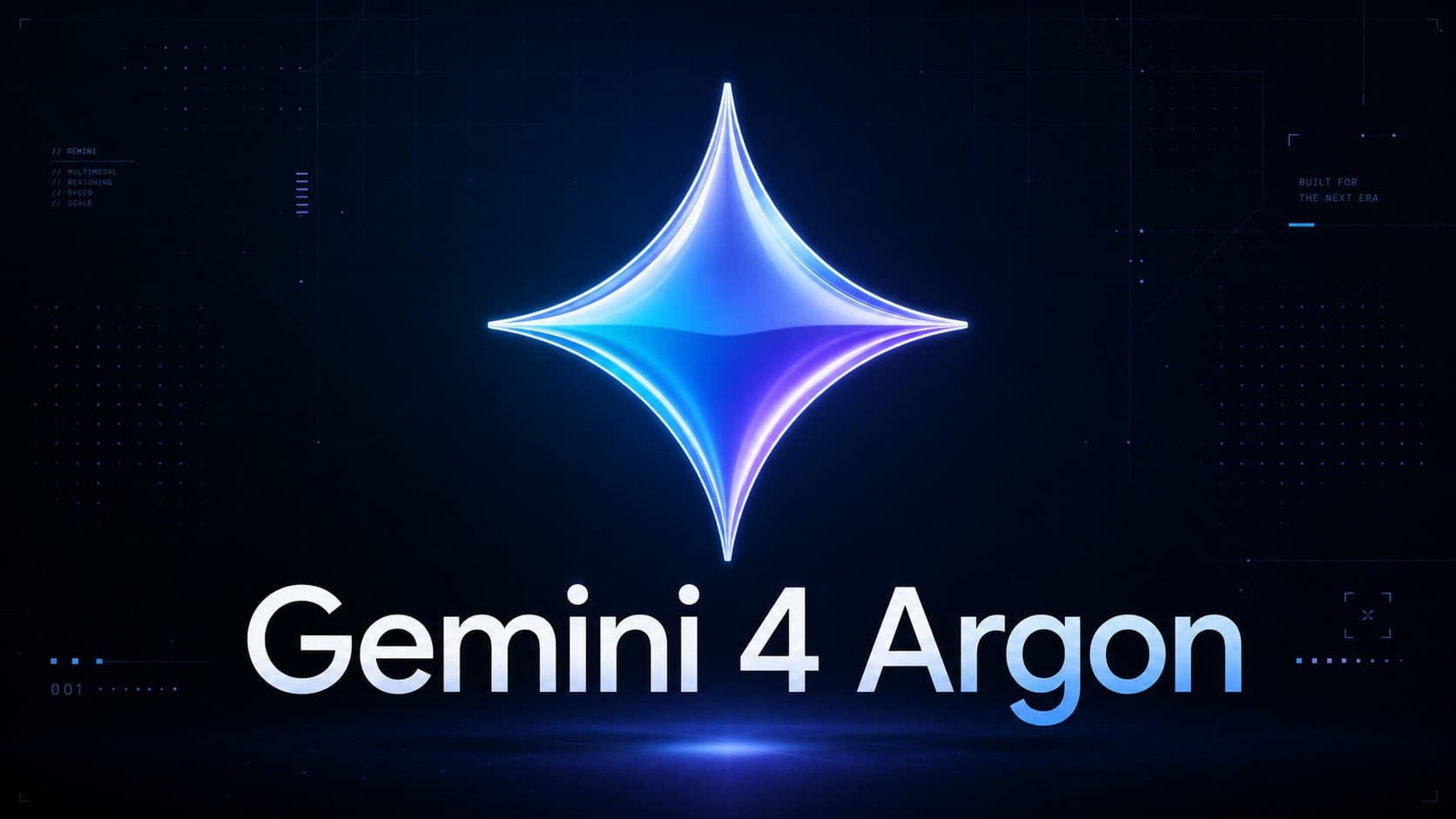
Google has officially begun rolling out its flagship AI model, Gemini 4 Argon, to developers and enterprises worldwide, moving beyond an initial preview phase previously limited to vetted cybersecurity defenders. The frontier model is now also accessible to Google AI Pro and Ultra subscribers through the Gemini app and AI Mode in Google Search, with varying access tiers depending on the platform and subscription level.
Gemini 4️⃣ Argon ✨ is now rolling out globally.
Our frontier model is built for complex, real-world tasks across coding, finance, legal, cybersecurity, and science.
Check out how you can use Argon in your favorite Google product 🧵 pic.twitter.com/PtoPqbtPel
– Google AI (@GoogleAI) October 13, 2026
This broader rollout follows Google’s initial unveiling of the model in late September, where the company emphasized Argon’s ability to handle complex, multi-step reasoning workflows across software development, financial analysis, legal research, and cybersecurity.
The expansion comes just a day after Meta unveiled its own Muse Wonder and Muse Wonder Full models on October 12, both engineered for agentic capabilities, software engineering, and multi-stage tasks. The close timing highlights intensifying competition among frontier AI labs to deliver systems capable of autonomously executing complete workflows rather than simply answering basic questions. According to Artificial Analysis benchmarks, Muse Wonder Full scored 56 on their AI index compared to 52 for the baseline Muse Wonder, with access to the top-tier model reserved for Muse Code subscribers.
How Can You Access Gemini 4 Argon?
Access methods for Gemini 4 Argon vary based on your user profile and subscription tier. Paying developers and enterprise clients can integrate the model using Google’s AI application development tools, while Google AI Pro and Ultra subscribers can access it directly within the Gemini web and mobile apps, as well as Search’s AI Mode.
Meanwhile, Antigravity-Google’s agentic software development platform-remains exclusive to Ultra tier subscribers, according to launch specifications.
Google has not yet announced a release date for free-tier users or standard Plus subscribers, meaning general consumer access remains limited for the time being.
How Much Does Gemini 4 Argon Cost via API?
Google has introduced competitive introductory API pricing for Gemini 4 Argon, starting at $2.00 per million input tokens and $10.00 per million output tokens. The promotional period also includes a 95% discount on cached input tokens compared to the baseline rate, reducing context caching costs to $0.10 per million tokens.
However, these introductory rates are temporary. Standard pricing will take effect following the end of the promotional window on November 30, 2026, doubling to $4.00 per million input tokens and $20.00 per million output tokens.
While these rates offer an attractive entry point for developers embedding the model into applications and agentic pipelines, actual deployment costs will depend heavily on token consumption, reasoning overhead, and the volume of calls required to execute end-to-end tasks.
What Distinguishes the Model in Real-World Workflows?
Google is positioning Gemini 4 Argon as an engine for deep work, prioritizing multi-stage planning and execution over short conversational replies. Core target workflows include complex software engineering, refactoring massive codebases, and parsing granular data in financial and legal environments.
Internal figures published by Google indicate that engineering teams using Argon within the Antigravity platform experienced a 35% increase in agentic code submissions, alongside a roughly 33% decline in code rollbacks. These metrics represent internal Google evaluations rather than independent third-party assessments.
Google also confirmed that Argon is deployed internally across specialized engineering and infrastructure tasks, reflecting a company-wide shift toward models tailored for continuous reasoning and self-correcting workflows.
Google Expands Gemini 4 Argon Cybersecurity Program
Alongside its commercial rollout, Google expanded its Fairwind Program, which grants authorized cybersecurity defenders early access to Argon. The initiative provides trusted security partners with a version of the model devoid of standard cyber guardrails, specifically designed to help uncover and patch zero-day vulnerabilities before malicious actors exploit them.
This staged rollout aligns with Google’s safety roadmap for frontier-tier AI, enabling rigorous real-world stress testing and feedback collection prior to general availability.
Additionally, Google announced six months of complimentary access to Antigravity’s top usage tier for 10,000 academic researchers, aiming to accelerate the use of frontier AI tools in scientific research.
Is Gemini 4 Argon Worth Trying?
Whether Gemini 4 Argon is worth adopting depends on your operational needs. The model represents a significant upgrade for developers managing intricate codebases and enterprises automating complex multi-step pipelines. For users who rely on AI primarily for everyday writing or quick conversational answers, Argon’s specialized architecture may be unnecessary, particularly given its paid subscription requirement.
The introductory pricing offers a strong incentive for initial testing, but teams should calculate projected token usage carefully before committing infrastructure, particularly with the scheduled price increase after November 30, 2026.
With this launch, Google transitions Gemini 4 Argon from restricted internal testing to production environments. Its lasting market impact will ultimately hinge on its operational reliability, sustained cost efficiency, and how quickly Google expands access across the broader ecosystem.