Kuaishou Unveils Kling 4.0 with Up to 30-Second Video Generation and Multi-Reference Control
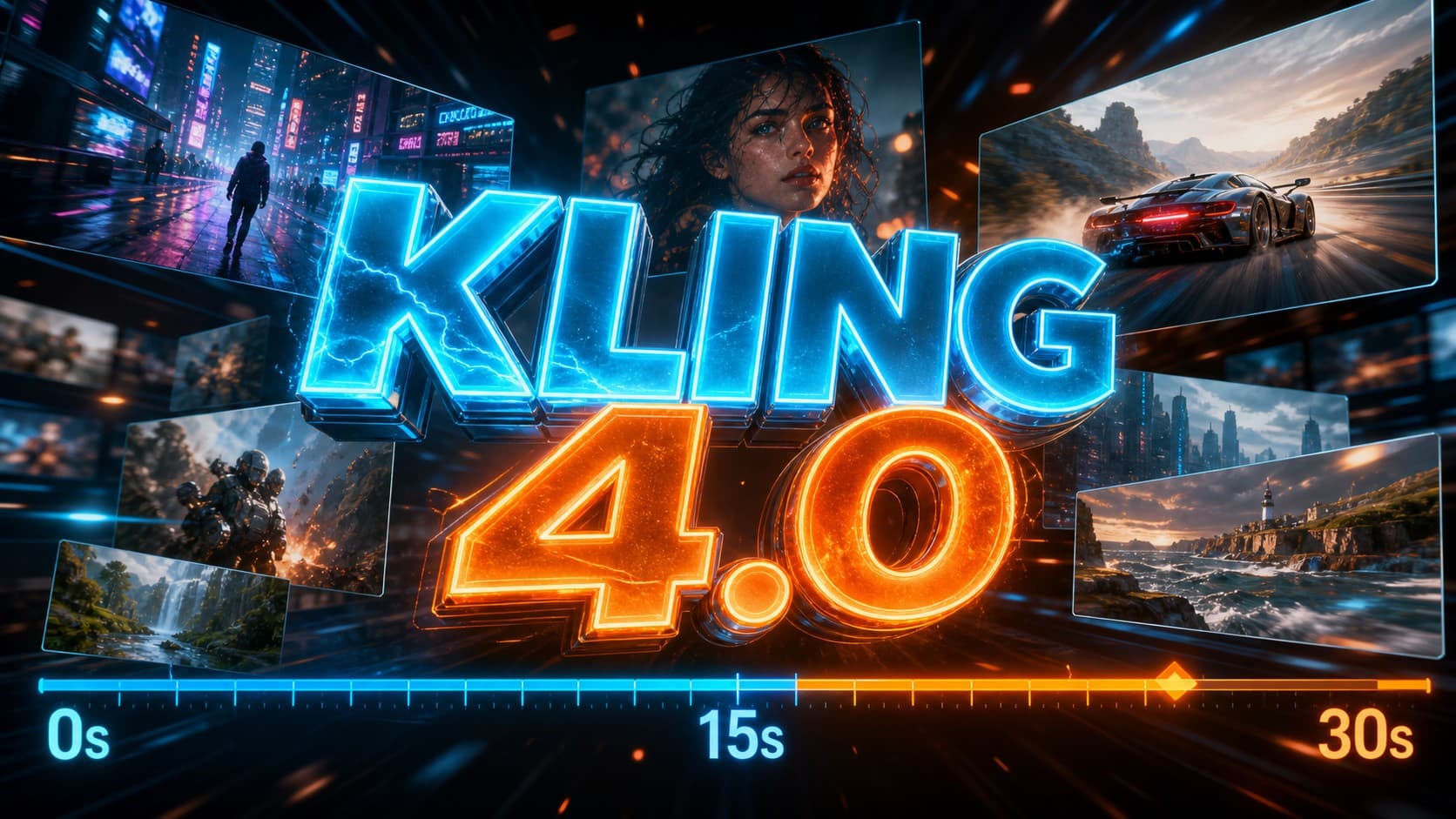
Chinese technology giant Kuaishou officially announced the latest generation of its AI video model, Kling 4.0, on September 28, 2026, marking a decisive move to reshape global competition in AI visual production. The company opened limited early access for its lighter Kling 4.0 Flash variant to Ultra Yearly subscribers, with the full model scheduled for general public release in October 2026. The new iteration introduces major technical milestones, headlined by native video generation of up to 30 seconds in a single pass, 4K and 1080p output in 10-bit HDR, and multimodal support combining as many as 15 references-including 10 images, 5 video clips, and 7 persistent subjects-within a single task.
Kling 4.0 is coming this October. Kling 4.0 Flash is live now for Ultra Yearly subscribers.
Kling 4.0 brings video creation to a new level of visual realism, creative control, and narrative completeness.
🎞️ Upgraded Audio & Visuals: Stable dynamic motion, high-quality stereo… pic.twitter.com/FDaqsWJeKt
– Kling AI (@Kling_ai) September 28, 2026
Industry analysts emphasize that this upgrade goes far beyond standard resolution enhancements, shifting generative AI video from brief experimental clips toward a comprehensive directorial workflow. The system introduces precise narrative control powered by up to 10 keyframes, alongside an extended video continuation feature capable of reaching approximately two minutes through sequential shots. The launch reflects Kuaishou’s aggressive drive to cement global leadership following the shutdown of OpenAI’s Sora project.
30-Second Continuous Scenes: An End to Fragmented AI Clips
Short clip durations have long posed the greatest obstacle to adopting generative AI across cinema, commercial advertising, and professional video production. The previous generation, Kling 3.0 (launched in February 2026), was capped at a 15-second native generation limit. Kling 4.0 doubles that ceiling to 30 seconds in a single uninterrupted pass, unlocking genuine long-take capability and continuous storytelling within a single generation.
For filmmakers, the leap from a 5-second clip to a 30-second scene represents a fundamental transition from an isolated visual snapshot to a fully realized cinematic sequence. While a brief clip is limited to passing movements-such as a turning vehicle or a quick glance-a 30-second window allows creators to establish an environment, introduce a character, stage dialogue, execute complex dynamic camera choreography, and land on a deliberate narrative beat. Moreover, native 30-second generation drastically reduces the need to stitch separately generated clips in editing software, an error-prone process that historically caused facial drift, wardrobe mismatches, lighting shifts, and background inconsistencies. To complement this, Kuaishou introduced a multi-shot continuation feature that extends scenes up to approximately 120 seconds while preserving visual and character continuity.
Precise Scene Sequencing Through Up to 10 Keyframes
The introduction of a keyframe workflow supporting up to 10 keyframes per generation gives creators granular, storyboard-level control over visual progression. Legacy text-to-video systems typically relied on a starting frame and occasionally an ending frame, leaving the model to improvise everything in between. In contrast, Kling 4.0’s keyframe architecture allows directors to define exact visual beats across the timeline.
For instance, a commercial creator can orchestrate a sequence with mathematical precision: setting the opening hero shot of a product at second 0, introducing human hand interaction at second 5, panning into a detailed close-up at second 12, transitioning the background environment at second 20, and concluding with the official brand logo card at second 30. In this context, generative work transforms from blind trial-and-error into an exact digital storyboard (Storyboard) with clear visual constraints. This workflow empowers production teams to fix minor pacing errors without rewriting entire prompts or regenerating full scenes from scratch.
15 References to Preserve Character and Subject Identity
Kling 4.0 deploys a hybrid Omni Reference system capable of processing up to 15 multimodal assets in a single task, distributed to maintain absolute scene consistency:
- Image References (Up to 10 images): Lock facial identity, detailed wardrobe, product geometry, and lighting direction.
- Video References (Up to 5 clips): Dictate body choreography, pacing, camera movement paths, and transition dynamics.
- Subject References (Up to 7 entities): Preserve persistent actors, branded products, vehicles, or mascots across scenes without geometric distortion.
Kuaishou reinforced this architecture by expanding the prompt limit to 8,000 tokens, supported by intelligent prompt-polishing tools. Additionally, the platform launched a dedicated “Remake Mode” that analyzes the cinematography, camera motion, and pacing of a reference video to construct entirely new commercial clips on the same structural blueprint-tailored for social media ads, fashion campaigns, and consumer electronics.
10-Bit Color Depth and Synchronized Audio in 9 Languages
While native 4K was already introduced in Kling 3.0, the true visual leap in Kling 4.0 lies in pairing 4K and 1080p resolution with 10-bit HDR color depth. This wider color volume preserves subtle tonal gradations in challenging environments-such as neon nightscapes, sunsets, smoke, fog, and reflective surfaces-while protecting natural skin tones for post-production color grading.
On the audio front, Kling 4.0 integrates dual-channel stereo sound with tightened lip-synchronization accuracy. The model natively supports 9 spoken languages-Chinese, English, Japanese, Korean, Spanish, Portuguese, German, French, and Hindi-alongside multiple accents (such as British and American English) and Chinese dialects including Cantonese. Furthermore, the engine reliably renders on-screen typography, multilingual text, logos, and emojis, all framed within a cinematic 21:9 ultra-wide aspect ratio.
Complementing these rendering upgrades is a suite of localized in-video editing tools. Creators can modify facial expressions, adjust camera paths, change weather conditions, or replace backgrounds within an existing video without regenerating the whole clip, drastically curbing wasted compute credits and turnaround times.
Kling 4.0 Flash Arrives Alongside a Redesigned Production Studio
Kling 4.0 Flash launched in an early-access rollout for Ultra Yearly subscribers, prioritizing high rendering speed and cost efficiency. The Flash variant is tailored for high-frequency prototyping, rapid prompt testing, social video production, and storyboard validation before committing to final high-resolution rendering.
In tandem, Kuaishou overhauled its creation studio interface. The workspace now consolidates image, video, and audio reference fields into a single unified input box, flanked by an interactive preview timeline and a canvas workspace guided by an AI agent assistant. While official API identifiers and per-second production pricing tables remain pending until the full October launch, the interface redesign sets a clear standard for professional creator pipelines.
Surging Revenues and New Funding for the Kling Platform
Kling AI has rapidly transformed from an experimental research project into a commercial powerhouse. Financial disclosures reveal that the platform generated over RMB 650 million in revenue in Q1 2026 (over 300% YoY growth), reaching an annualized revenue run rate of approximately $500 million in March. Growth continued in Q2, with revenues surpassing RMB 850 million, up more than 200% year over year.
In July 2026, the company finalized its first independent Series A funding round, securing $2.8 billion from prominent backers including Alibaba, Tencent, and Baidu, propelling Kling AI’s valuation to roughly $18 billion. This milestone produced a remarkable market dynamic: the subsidiary’s valuation surpassed the $17 billion market capitalization of its parent company, Kuaishou, whose stock declined over 60% over the past year amid slowing core advertising and live-streaming revenues. Operating as an independent unit with dedicated management, Kling AI is actively preparing for an anticipated Hong Kong IPO.
Meanwhile, competition across the AI video sector remains fierce. ByteDance’s Seedance 2.5 has established strong market dominance since July, alongside cost-effective options from Alibaba and MiniMax. Kuaishou faces a critical window to translate technical leadership into long-term enterprise retention among global film studios, advertising agencies, and production houses.
What Does Kling 4.0 Mean for the Video Industry?
Kling 4.0 proves that the next frontier in generative video will not be measured by raw pixel count alone, but by directability, temporal consistency, and production reliability. By unifying 30-second continuous scenes, 10-keyframe storyboards, and 15 multimodal references, the platform brings generative AI significantly closer to a professional cinematic environment.
Ultimately, practical real-world testing following the October 2026 public rollout will serve as the true benchmark for character stability, complex camera tracking, and 10-bit color retention. One reality is already clear: the technological race is shifting from random visual spectacle to structured storytelling, removing technical barriers so creators can bring their boldest artistic visions to life.