Grok vs. Seedance 2.5: Which AI Video Generator Best Suits Your Needs?
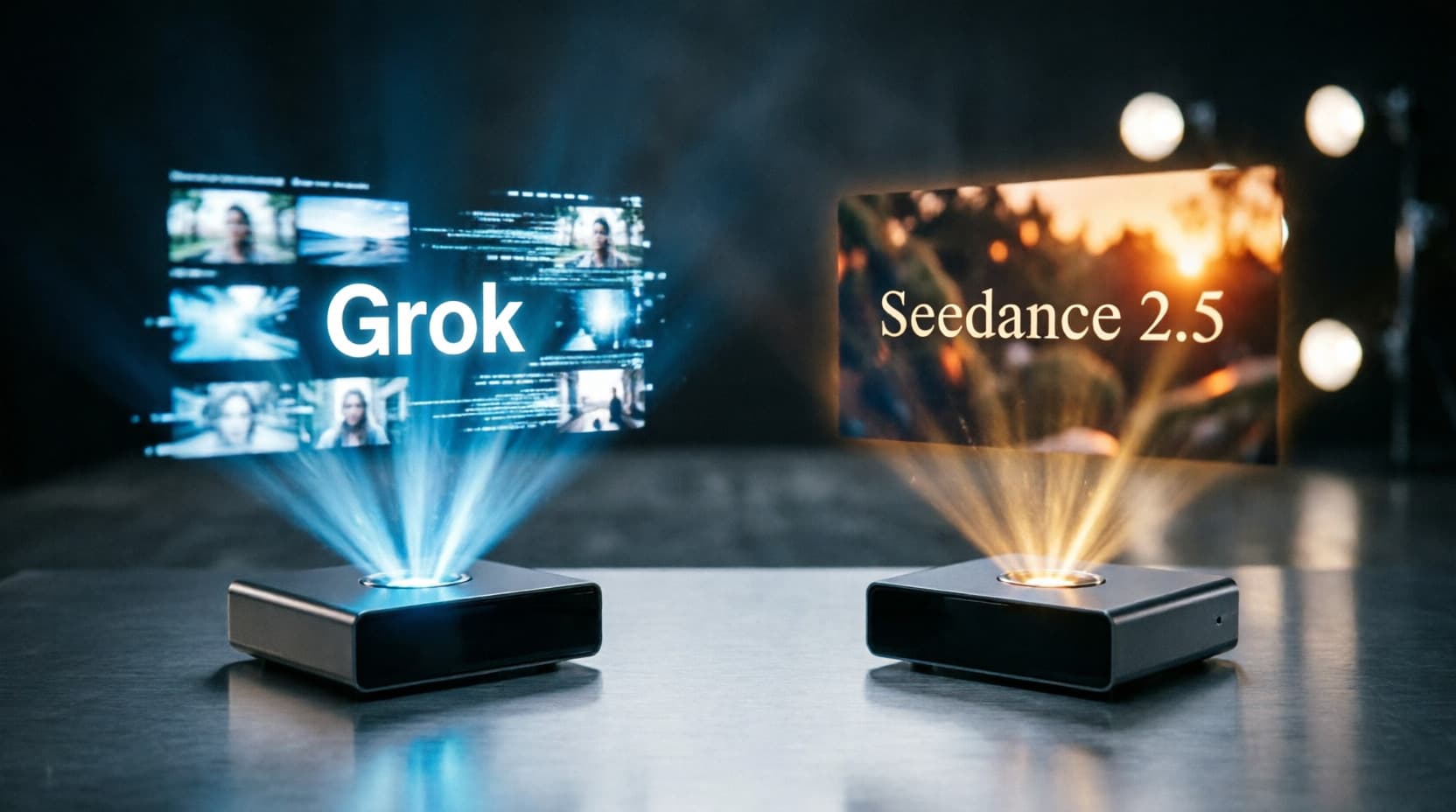
The landscape of generative AI video has witnessed rapid advancements recently. ByteDance has officially launched its highly anticipated model, Seedance 2.5, across its Jimeng AI (Dreamina) and Doubao Pro platforms. Concurrently, xAI rolled out significant upgrades to Grok Imagine Video 1.5. This double release presents a crucial question for content creators, marketers, and developers: which tool is the right choice for transforming ideas into high-quality moving images? This comparative analysis dives deep into the core capabilities, limitations, and practical use cases of both models.
Seedance 2.5: Cinematic Prowess and Emotional Depth
ByteDance’s Seedance 2.5 is built with a clear cinematic focus. According to official documentation and community benchmarks, the model’s standout capabilities include:
- Continuous Generation: Supports up to 30 seconds of continuous video generation in a single pass, with options to extend for multi-minute outputs.
- Native 4K & 10-bit Color: Offers ultra-high-definition output with rich, deep color profiles ideal for professional displays.
- High Reference Capacity: Accepts up to 50 reference files in a single prompt workflow, including up to 30 images, 10 videos, and 10 audio files.
The model excels at maintaining character consistency. Facial features, clothing folds, and product textures remain stable even through complex camera pans and changes in perspective. Furthermore, its physics engine delivers remarkably lifelike interactions, such as realistic rain droplet collisions and natural fabric movement during walking sequences.
Early tests highlight the deep emotional expressiveness of the generated characters. Micro-expressions, subtle lip quivers, shifts in gaze, and tears are rendered with impressive dramatic timing. The model also responds precisely to complex directorial prompts, such as executing dolly zooms or complex circular tracking shots in a single, unbroken take.
Industry analysts note that the reference-based editing features offer creators unmatched flexibility. Adjusting camera angles post-generation does not compromise character stability or lighting continuity. Additionally, region-based inpainting tools allow users to edit specific frames or elements without regenerating the entire clip.
Despite these strengths, minor visual artifacts can occasionally occur. Users have noted occasional clipping issues, such as overlapping hands during fast-paced action scenes or distorted background shadows in highly complex environments. ByteDance has acknowledged that refining multi-character physical interactions remains an ongoing focus area.
Grok Imagine Video 1.5: Speed, Ecosystem, and Cost-Effectiveness
On the other hand, xAI’s Grok Imagine Video 1.5 focuses heavily on speed, processing efficiency, and practical utility. Powered by the xAI infrastructure, the model supports native text-to-video generation up to 1080p resolution. Its primary specifications include:
- Clip Duration: Typically generates 5 to 10-second clips per run, supporting up to 15 seconds in specific configurations.
- Output Quality: Crisp 1080p resolution optimized for digital screens.
- Reference Capacity: Supports up to 7 visual reference images synced alongside a single voice reference file.
Grok is highly regarded for its precision in executing multi-step camera commands. Compounded prompt instructions, such as a “slow zoom paired with a lateral slide,” are executed smoothly without distorting the scene. This makes it an ideal tool for creators who require tight, mechanical camera control in shorter cuts.
A major highlight of the model is its voice-to-face consistency feature. By linking a character’s image with an audio recording, the system maintains accurate lip-syncing and facial alignment across the entire clip. Additionally, generation speed is exceptionally fast, minimizing queue wait times compared to other premium tools on the market.
An added benefit for users within the xAI ecosystem is Grok’s integration with other developer tools, such as Build Mode. This allows developers to quickly generate functional web applications from simple text prompts and then seamlessly produce corresponding promotional videos within the same platform.
From a pricing perspective, Grok represents an economical choice. Available via SuperGrok subscription tiers, it offers a highly competitive cost-per-second rate, making it accessible for everyday users and bootstrapped startups.
Prompt Engineering: Contrasting Approaches
The workflow of each tool dictates how prompts should be written. Grok relies on highly descriptive, text-driven instructions. Users gain the best results by detailing exact lens specifications and mechanical movements-such as requesting a “close-up shot with a deliberate slow-motion pan.” The system translates these literal prompts into smooth, mechanical camera moves.
Conversely, Seedance 2.5 relies on a multimodal, asset-first approach. Instead of describing complex movements in words, users can upload a brief motion reference video, combine it with character images, and sync it with audio. While this approach minimizes the need for extensive text prompting, it requires the user to prepare high-quality reference assets beforehand.
Beyond Entertainment: Industrial and Educational Uses
While AI video generation is primarily used in creative media and digital advertising, Seedance 2.5 is finding broader utility in technical fields. In robotics and manufacturing, the model is used to generate high-quality synthetic video data to train vision systems. For autonomous driving, it simulates rare, high-risk environmental scenarios-such as extreme weather and unpredictable traffic patterns-allowing AI driving systems to train safely in virtual environments.
In the educational sector, teachers and creators utilize these tools to animate historical figures and visualize abstract scientific concepts, making complex learning materials highly engaging and easier to digest.
Quick Comparison of Technical Specs
To help you compare both tools at a glance, here is a breakdown of their primary technical specifications:
- Max Continuous Duration: 30 seconds (Seedance 2.5) vs. 10 to 15 seconds (Grok).
- Native Resolution: 4K with 10-bit color (Seedance 2.5) vs. 1080p (Grok).
- Input Capacity: Up to 50 multimodal files (Seedance 2.5) vs. Up to 7 image references and 1 audio sync (Grok).
- Detail Control: Multi-frame region inpainting and R2V layout editing (Seedance 2.5) vs. Direct textual camera motion controls (Grok).
- Processing & Cost: Slower render times with premium costs (Seedance 2.5) vs. Ultra-fast generation speeds and lower operational costs (Grok).
Real-World Use Case Scenarios
How do these specifications apply to daily creative workflows? The choice depends largely on the nature of your project.
Scenario 1: Fast-Paced Social Media Content. If you publish daily videos on platforms like X (Twitter), TikTok, or Instagram, Grok is often the better fit. Its fast processing times and low cost allow you to iterate rapidly. A 1080p output is fully optimized for mobile viewing, and the responsive camera movements add a professional touch to short-form content.
Scenario 2: Commercial Advertisements and High-Quality YouTube Videos. Marketers looking to showcase products with cinematic flair will find Seedance 2.5 highly beneficial. The ability to upload product reference photos and generate realistic, light-reactive backgrounds ensures natural integration. The native 4K resolution is also essential for content viewed on larger desktop or television screens.
Scenario 3: Music Videos and Visualizers. Seedance 2.5 excels here due to its extensive audio referencing. Syncing multiple audio stems with artist images yields highly consistent, rhythmically timed visual sequences that maintain facial details for up to 30 continuous seconds.
Scenario 4: Startups and Small Businesses. Grok offers a unique advantage for entrepreneurs. Through the xAI ecosystem, founders can build a web application mockup and quickly produce short, functional video walkthroughs in a streamlined, cost-efficient workflow.
Conclusion
The current state of AI video generation highlights a clear division in the market. On one hand, Grok offers a fast, highly accessible, and budget-friendly tool integrated into a broader developer ecosystem. On the other hand, Seedance 2.5 delivers a high-fidelity, cinematic powerhouse capable of producing longer, highly customized visual sequences. The ideal choice rests entirely on your budget, required output length, and specific project goals.