Unified Memory Connects Claude and Claude Cowork: Anthropic Ends Repetitive Prompting with Granular Privacy Controls
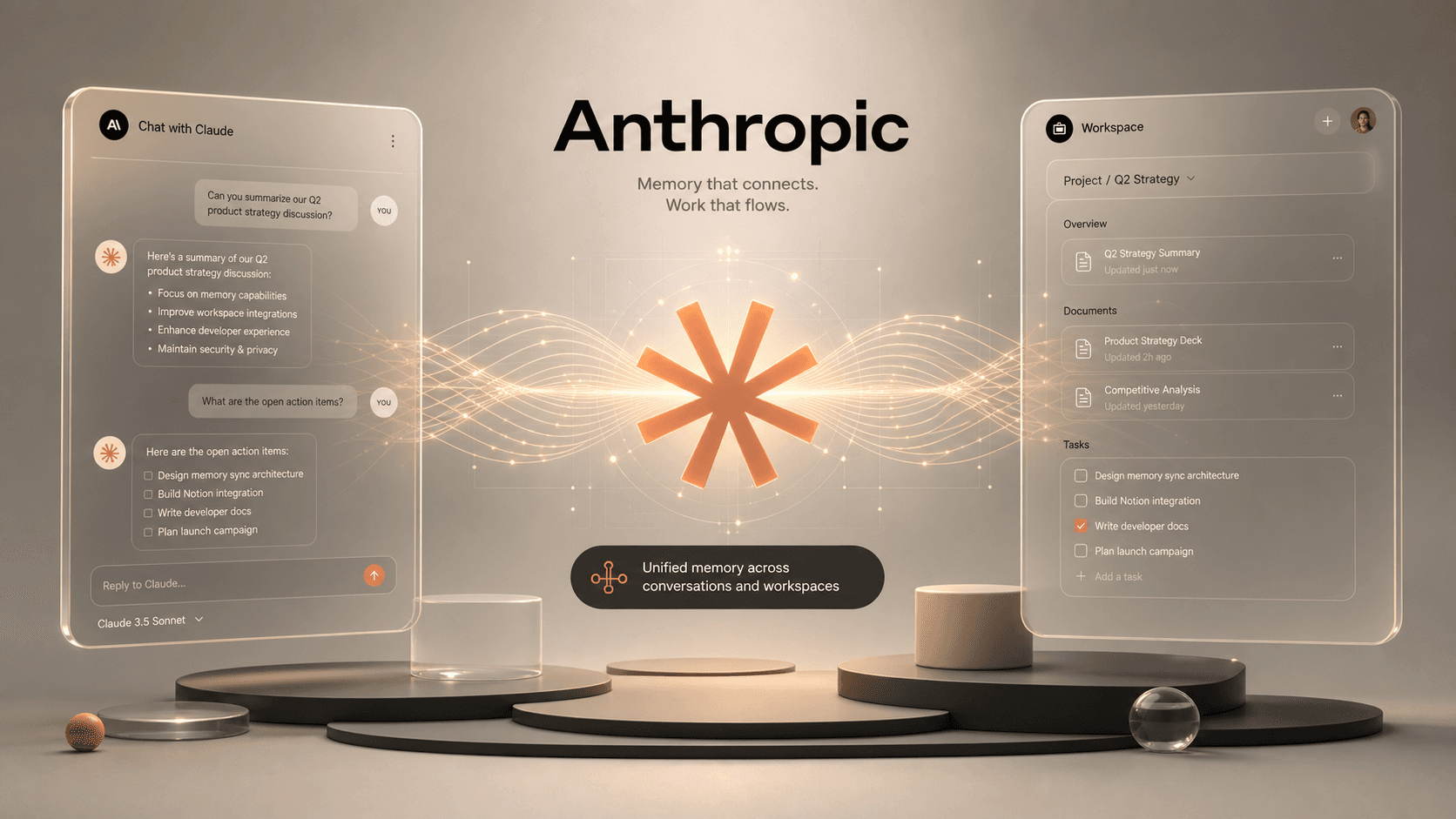
Anthropic has eliminated one of the most persistent friction points in generative AI workflows by merging the memory architecture across its Claude chatbot and its autonomous agent, Claude Cowork. Under this major update, the AI assistant maintains synchronized, bidirectional context across sessions, freeing users from having to repeatedly re-explain project backgrounds, preferences, and operational rules every time they initiate a new task.
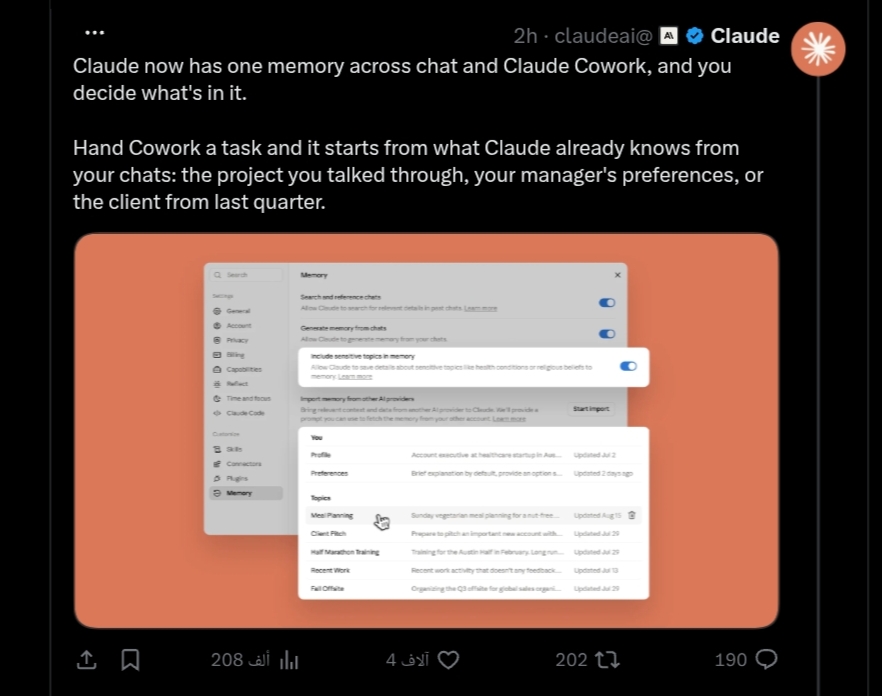
In tandem with the unified architecture, the San Francisco-based AI company is giving users full transparency over their stored data. Users can now view, edit, or delete specific memories organized by topic directly within their settings. Anthropic has also reinforced its privacy safeguards: storage of personal and sensitive information remains disabled by default, while strict guardrails permanently block the retention of government IDs, criminal histories, and legal immigration records under all circumstances.
Connecting Chat to Action: Bridging Ideation and Cloud Execution
Historically, working with multi-tool AI ecosystems suffered from severe context fragmentation. A professional might spend hours refining strategies, structuring agendas, or defining parameters inside a chat window, only to switch to an execution agent like Claude Cowork-launched earlier this year to automate repetitive computer tasks in the cloud-and find themselves starting over from scratch.
This disconnect created an inefficient workflow where users had to feed lengthy briefing prompts to the agent before it could begin work.
The unified memory system establishes a continuous, two-way bridge between conversational research and practical execution:
- Context In, Execution Out: Knowledge accumulated during chat discussions is instantly accessible when handing tasks off to Claude Cowork.
- Closed-Loop Feedback: Details and adjustments discovered by Cowork during cloud executions flow back into the main chat history.
Anthropic highlights three immediate workplace scenarios where this integration saves valuable time:
- Executive Reporting: When asking Cowork to draft a progress update for management, the agent already recognizes the manager’s identity, priorities, and preferred reporting format based on past chat sessions.
- Event & Logistics Planning: Brainstorming a conference schedule in chat allows Cowork to build budget spreadsheets and logistical decks seamlessly, automatically pulling speaker lists, venue cities, and target headcount without re-entry.
- Quarterly Performance Reviews: Explaining team KPIs and calculation formulas once ensures that every subsequent quarterly business review deck Cowork compiles adheres strictly to those definitions.
Dynamic In-Chat Memory: Why Anthropic Retired Post-Session Summaries
The update marks a foundational shift in how Claude captures and stores information. Previously, memory systems relied on summarizing conversations after a session ended-an approach that frequently overlooked nuanced details and delayed context synchronization across active windows.
Under the new engine, Claude identifies and indexes key details in real time as the conversation unfolds. If a user casually mentions that a project launch has moved to September, Claude updates its active knowledge base immediately without requiring explicit commands such as “remember this.”
This dynamic recording aligns directly with the recent upgrade to the Claude for Chrome extension. Interactions occurring in the browser’s side panel now become part of the unified user profile, ensuring seamless data flow between web research and desktop tasks.
Full User Control: Viewing, Editing, and Deleting Saved Memory Topics
To address transparency concerns surrounding AI data retention, Anthropic introduced a dedicated memory management dashboard in Claude’s settings.
Key control features include:
- Topic-Based Modular Files: Stored memories are organized into concise, readable files categorized by specific projects, preferences, or topics.
- Inline Manual Editing: Users can modify any record directly. Correcting a company’s rebrand or an updated job title in a single file immediately updates Claude’s understanding across all future chat and Cowork sessions.
- Granular and Global Deletion: Users maintain the freedom to delete individual topic files, pause the memory engine temporarily, or reset the entire memory database with a single click.
Privacy Governance: Balancing Personalization with Strict Data Guardrails
As AI systems retain deeper contextual profiles, data privacy and user consent become paramount. Anthropic’s updated memory framework introduces clear boundaries separating everyday workflow data from sensitive personal information.
Default-Off Sensitive Data and Instant Notifications
By default, Claude does not record personal or sensitive subject matter, including:
- Health conditions and medical data
- Religious beliefs and philosophical views
- Political affiliations and stances
- Racial, ethnic, or gender identity details
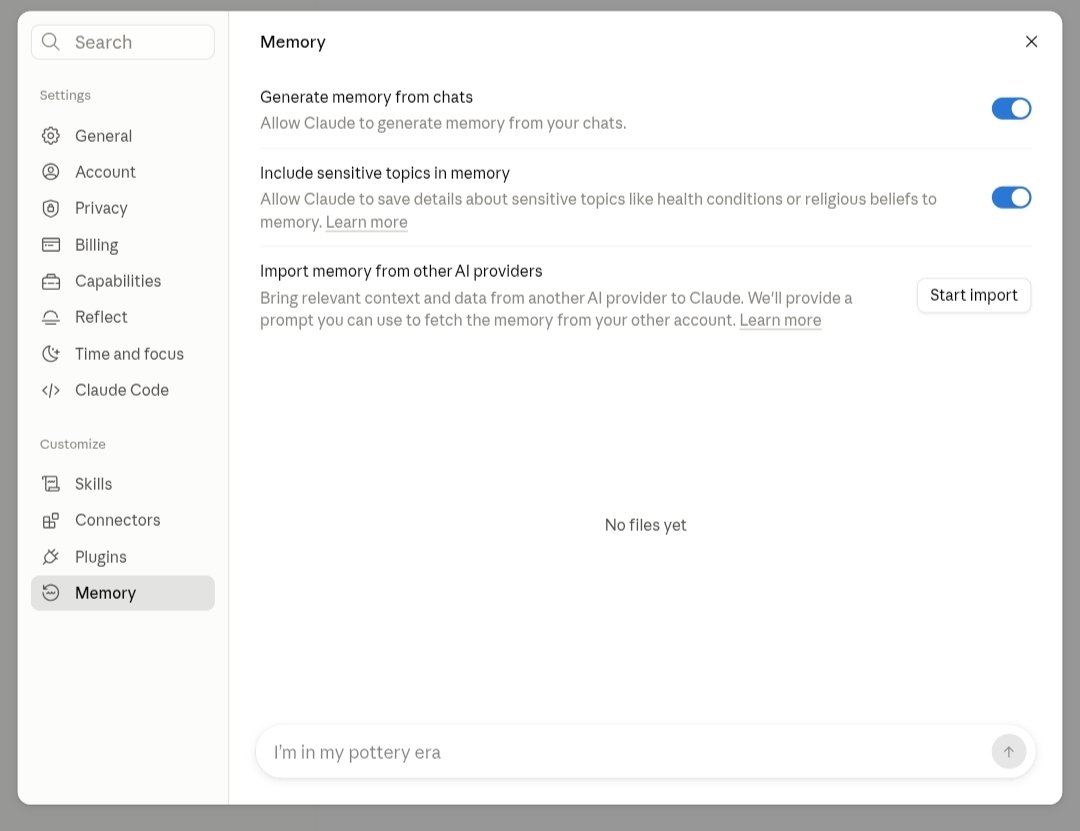
However, recognizing that certain personal details enhance daily utility-such as remembering a gluten allergy when suggesting meal prep recipes-Anthropic includes an optional toggle: “Include sensitive topics in memory.”
When enabled, Claude displays an on-screen visual notification every time it saves a sensitive topic. Crucially, the system does not scan past chat logs retroactively; it only captures new information going forward, and users can disable the setting or erase saved entries at any time.
Absolute Red Lines: Restricted Identifiers and Legal Records
Even with sensitive topics enabled, Anthropic enforces hard restrictions on high-risk data categories:
- Social Security numbers and government-issued ID credentials
- Criminal records and judicial histories
- Immigration and legal residency documentation
- Any content violating Anthropic’s Acceptable Use Policy (AUP)
If a user inputs any of these details, Claude declines to store them and provides an immediate system notice explaining why the data cannot be retained.
Plan Availability and Cross-Platform Deployment
The unified memory feature is rolling out across multiple subscription tiers and platforms:
- Individual Accounts (Free, Pro, Max): Memory is enabled by default across web browsers, desktop applications, and mobile apps (iOS and Android, requiring the latest app update).
- Enterprise and Team Accounts: To protect internal corporate governance and data integrity, memory is disabled by default and remains subject to admin approval and configuration.
Anthropic confirmed that its developer-focused coding environment, Claude Code, remains separate from this rollout to preserve an isolated, high-performance command-line environment for software engineers.
The Rise of AI Super-Apps: Productivity Gains vs. Data Stewardship
Anthropic’s move reflects a broader industry trend toward AI “super-apps”-ecosystems that converge chat interfaces, autonomous agents, and desktop automation into a single, unified experience. Eliminating repetitive briefing allows knowledge workers to transition frictionlessly from ideation to execution.
At the same time, persistent AI memory places greater responsibility on users to monitor what their systems retain. While unified context delivers substantial productivity gains, managing privacy settings remains essential. Under its privacy policy, Anthropic provides an opt-out option within account privacy settings for users who prefer not to have their interactions utilized for future model training and improvements.
With this update, Anthropic sets a new benchmark for contextual AI: delivering a cohesive assistant that understands long-term project nuances while keeping data governance firmly in the user’s hands.