Anthropic Launches Claude Duet AI Agent for Business Automation
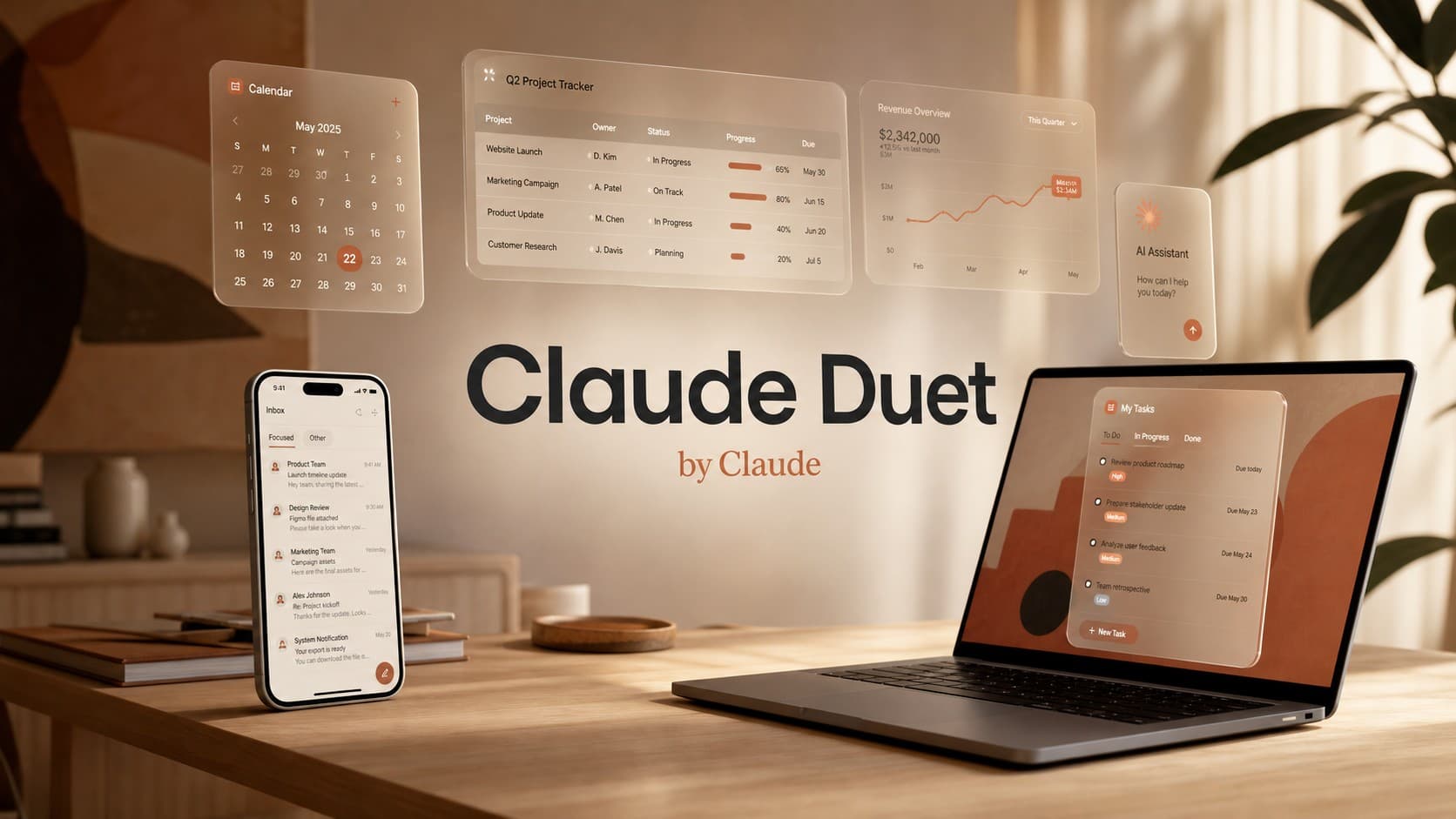
Anthropic has launched Claude Duet, a new AI agent designed to help users manage ongoing work and handle tasks more proactively. Rather than responding only when someone opens a chat and submits a request, the assistant is built around the idea of keeping track of work, following relevant updates across connected apps, and bringing important items to the user’s attention.
We’re opening a research preview of Claude Duet, a new app where Claude works as a proactive agent.
It comes to you with what needs your attention, completes tasks you ask of it, keeps working when you step away, and checks with you before it acts on your behalf. pic.twitter.com/kt8gAbWuX8
– Claude (@claudeai) October 21, 2026
The launch reflects a broader shift in AI assistants, from tools that primarily answer questions or generate content to systems that can support longer workflows. Instead of treating every request as a separate interaction, Claude Duet aims to help users keep projects moving and prepare the next steps in their work.
How Claude Duet Handles Ongoing Tasks
Claude Duet is designed to support work that requires more than a single prompt. This can include organizing schedules, keeping track of messages and appointments, preparing documents, summarizing information, and helping users get ready for meetings.
These capabilities could be particularly useful for professionals who spend much of their day switching between email, calendars, documents, and business applications. Rather than checking each service separately, users can rely on an AI assistant to bring relevant information together and highlight tasks that may need their attention.
The assistant can also help with work that takes multiple steps. It can prepare materials, organize relevant information, and return to the user when a review or decision is needed. The goal is to reduce the time spent coordinating routine tasks while leaving important decisions in the user’s hands.
App Integrations, Memory, and Skills
Connecting an AI assistant to workplace applications can make it more useful beyond the chat window. With access to supported services, Claude Duet can work with information from different parts of a user’s workflow instead of relying solely on what they type into a conversation.
Memory can help preserve relevant context across ongoing projects, reducing the need to explain the same background information repeatedly. Skills, meanwhile, can help tailor the assistant’s approach to particular tasks and recurring workflows.
These features could be valuable for small-business owners, independent professionals, and teams that manage a steady stream of communications and administrative work. Instead of using AI for isolated tasks, they can incorporate it into a more connected process that supports several related activities.
The usefulness of these integrations will depend on which services are available, what permissions users grant, and how effectively the assistant interprets the information it can access.
What Sets Claude Duet Apart From Traditional AI Chatbots?
The main distinction is its emphasis on proactive assistance and continued task management. A conventional chatbot generally waits for a user to ask a question or provide a new instruction. An AI agent built around ongoing workflows aims to keep track of relevant context and help identify what should happen next.
This approach places Claude Duet within a growing category of AI agents designed to do more than generate text. These systems aim to connect reasoning with practical work, helping users move from planning and drafting to coordinating tasks across supported applications.
However, proactive assistance also introduces challenges. An agent needs to understand which information matters, distinguish urgent tasks from less important ones, and avoid acting on incomplete or misunderstood instructions. Its value therefore depends not only on automation, but also on accuracy and the quality of its judgment.
Security and User Control
An AI agent that can work with business applications needs clear limits on what it can do independently. Actions involving sensitive information, external communications, financial activity, or irreversible changes require particular care.
Human approval remains an important safeguard when a task involves a consequential decision or an action that should not be taken automatically. An assistant can prepare a draft, organize the relevant details, or recommend a next step without necessarily having the authority to complete the action itself.
These safeguards are especially important in professional environments, where a misunderstood message or an unintended change can have real consequences. Users also need to understand what information the assistant can access and which permissions they have granted.
Claude Duet Availability
Anthropic has begun making Claude Duet available through a limited research preview, with access initially restricted to eligible subscribers in the United States through a waitlist. This means availability is not yet universal, and access may depend on the user’s account and eligibility.
The preview gives the company an opportunity to evaluate how the assistant performs in everyday workflows, including its ability to manage ongoing tasks and work with connected applications. Broader availability will depend on Anthropic’s subsequent rollout announcements.
Users interested in trying Claude Duet should check Anthropic’s official channels for the latest information about eligibility, supported platforms, and access requirements.
What Claude Duet Means for the Future of AI Assistants
Claude Duet represents a wider move toward AI assistants that can support work over time rather than simply respond to individual prompts. The potential benefit lies in coordinating routine activities, keeping relevant information organized, and helping users focus on decisions that require their attention.
For this approach to succeed, the assistant must do more than automate steps. It needs to handle context reliably, work accurately across connected services, and give users meaningful control over important actions.
As AI agents become more closely integrated into everyday work, their long-term value will depend on whether they can save time without adding complexity or compromising trust. Claude Duet’s development will be worth watching as Anthropic continues to expand its approach to AI-powered work management.